
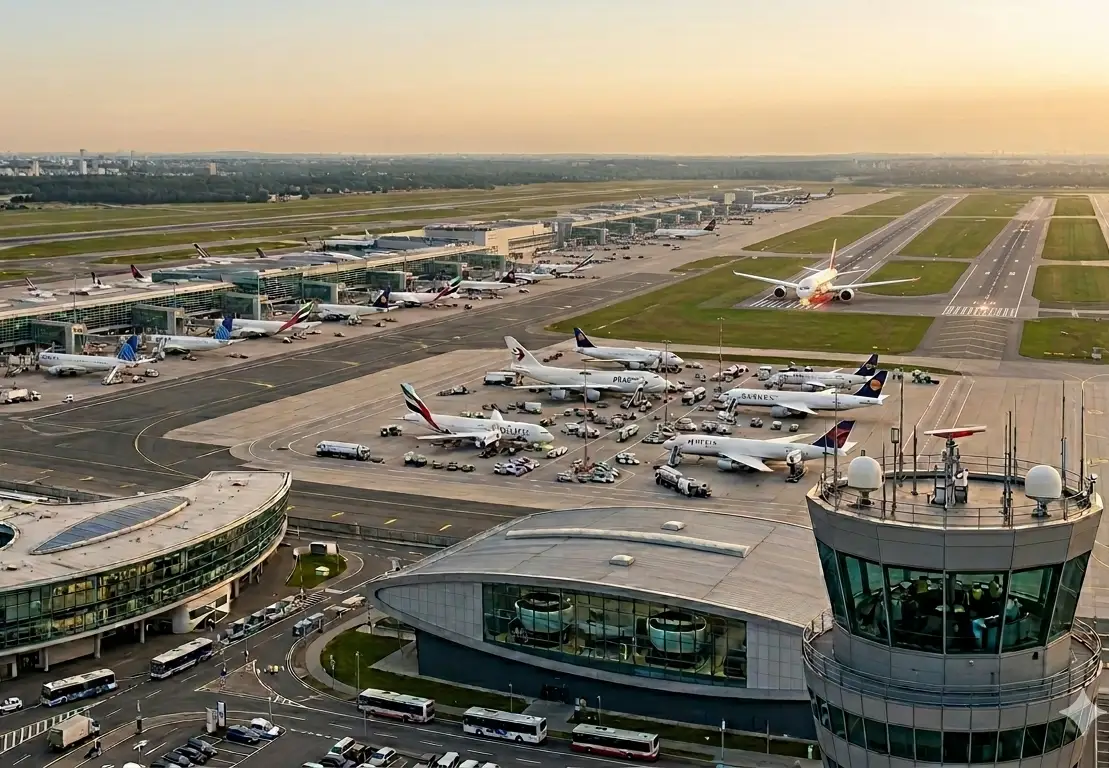

India: One of the Fastest Growing Aviation Markets
India is currently the third-largest domestic aviation market in the world, supported by rapid economic growth, rising middle-class travel demand, and improved regional connectivity.
According to industry forecasts:
- India recorded over 174 million air passengers in 2024
- Air travel demand continues to grow annually
- Aviation penetration is still low compared to developed nations, leaving enormous future growth potential
This sustained expansion means more aircraft operations, more flights, and most importantly, continuous demand for aircraft maintenance professionals who ensure operational safety.
Massive Aircraft Expansion Driving AME Demand
Aircraft fleet expansion is the single biggest factor creating opportunities for AMEs.
Latest Industry Projections
- Boeing forecasts 3,290 new commercial aircraft will be added in India and South Asia over the next 20 years
- Indian airlines already have 1,700+ aircraft on order
- Fleet expansion in India is focused on growth rather than replacement
Every aircraft entering service requires certified maintenance personnel throughout its operational life cycle. (Source: Reuters)
What This Means for AME Graduates
For each aircraft, the industry typically requires:
- 4 to 6 Licensed AMEs (B1/B2)
- 25 to 30 maintenance technicians
- Certifying engineers for base and line maintenance
As fleets expand, AME demand grows proportionally, making Aircraft Maintenance Engineering one of the most secure aviation careers.
Airport Expansion Across India
Infrastructure development is another powerful growth driver. India is actively expanding aviation accessibility beyond metro cities through regional connectivity initiatives.
Key developments include:
- Operational airports expanding rapidly nationwide
- Government vision to develop around 220 airports
- Increased connectivity to Tier-2 and Tier-3 cities
- New airports becoming operational every year
More airports automatically lead to:
- Increased aircraft movement
- Higher maintenance frequency
- Expansion of airline engineering bases
- New aviation employment hubs
This ensures AME career opportunities are no longer limited to major metropolitan cities.
Rise of Maintenance, Repair and Overhaul (MRO) Facilities
India is rapidly emerging as a global MRO hub, significantly boosting employment for Aircraft Maintenance Engineers.
A major example includes:
- IndiGo’s ₹1,100 crore MRO facility at Bengaluru Airport
- Capability to service wide-body and narrow-body aircraft
- Expected creation of 750+ direct engineering and technical jobs
- Long-term goal of positioning India as an Asian MRO center
Large-scale MRO investments create continuous demand for licensed AMEs across inspection, repair, certification, and quality assurance roles.
Aviation Growth Creating Millions of Jobs
The Indian aviation ecosystem including airlines, airports, ground handling, cargo, and maintenance sectors is projected to generate massive employment.
Industry estimates indicate:
- Aviation sector expected to employ up to 4 million professionals by 2035
- Technical roles forming a major portion of workforce demand
- Licensed maintenance engineers among the most critical shortages
Unlike many careers affected by automation, aircraft maintenance remains a human-certified safety profession, ensuring long-term relevance.
Regional Aviation and New Career Locations
India’s aviation growth is now spreading beyond traditional hubs such as Delhi and Mumbai.
New aviation ecosystems are emerging through:
- Regional airport development
- Pilot training hubs
- Maintenance bases
- Cargo and logistics expansion
For example:
- Air India’s upcoming aviation training ecosystem in Amravati is expected to generate 3,000+ jobs
- Regional airports are creating localized aviation employment clusters
This expansion allows AME graduates to build careers across India rather than relocating internationally at the beginning of their careers.
Why AMEs Are Indispensable in This Growth Story
While pilots operate aircraft, Aircraft Maintenance Engineers ensure aircraft safety before every flight. No aircraft can legally fly without certification from a licensed AME.
As aviation expands:
- Aircraft utilization increases
- Maintenance cycles become more frequent
- Safety regulations become stricter
- Airlines require larger engineering teams
This makes AMEs one of the most indispensable professionals in aviation operations. Industry studies consistently highlight licensed AMEs as a high-demand technical profession with global mobility.
Global Career Opportunities for Indian AMEs
DGCA licensing standards align closely with international aviation regulations.
As a result, Indian AMEs find opportunities in:
- International airlines
- Global MRO organizations
- Aircraft leasing companies
- Aerospace manufacturing firms
- Overseas aviation markets in the Middle East, Europe, and Asia-Pacific
With aviation growth occurring worldwide, AME graduates benefit from both domestic expansion and international employability.

The Future Outlook for Aviation Students
India’s aviation growth is not a temporary recovery. It represents a structural transformation supported by:
- Fleet expansion
- Airport modernization
- Government investment
- Private airline growth
- Global aviation partnerships
For aspiring aviation professionals, especially AME students, this period represents a historic career opportunity.
Choosing Aircraft Maintenance Engineering today means entering an industry that will continue expanding for decades while maintaining one constant requirement:
Every aircraft must be maintained, inspected, and certified by a licensed Aircraft Maintenance Engineer.
(Sources: Ministry of Civil Aviation Annual Reports, Boeing Commercial Market Outlook 2026, Directorate General of Civil Aviation (DGCA), Airports Authority of India (AAI), Reuters Aviation Industry Forecast, Times of India Aviation Infrastructure Reports, Indian Aviation Industry Employment Projections, AME Industry Workforce Analysis Reports)