
Top
about
element

How to Become an Aircraft Maintenance Engineer (AME) ?

Aircraft Maintenance Engineering is one of the most responsible and respected careers in the aviation industry. Every aircraft that takes off must be certified as airworthy by a licensed Aircraft Maintenance Engineer. Without an AME’s approval, no aircraft is legally permitted to fly.

Becoming an AME in India follows a clearly defined pathway regulated by the Directorate General of Civil Aviation (DGCA), Government of India, under CAR-66 licensing regulations aligned with global aviation standards.

Here, we explain the complete step-by-step journey from student to licensed Aircraft Maintenance Engineer.

Step 1: Meet the Eligibility Criteria

The first step towards becoming an AME begins right after higher secondary education.

To enrol in an AME program, students must have:

  • Completed 10+2 with Physics, Chemistry, and Mathematics (PCM)

OR

  • Diploma in Engineering recognised by AICTE or State Technical Education Board with PCM subjects

These academic requirements ensure that students possess the scientific and analytical foundation necessary to understand aircraft systems, aerodynamics, propulsion, and aviation technology.

Students from science and technical backgrounds are ideally suited for this profession as aircraft maintenance demands precision, technical understanding, and problem-solving ability.

Step 2: Join a DGCA-Approved AME Institute (CAR-147)

After meeting eligibility requirements, students must enrol in a DGCA-approved AME training organisation operating under CAR-147 regulations.

DGCA approval is essential because:

  • Only approved institutes can provide recognised AME training
  • Training follows international aviation safety standards
  • Students become eligible for DGCA licensing examinations

At approved institutes such as ARDC, part of the Sha-Shib Group network, students receive structured aviation education supported by modern laboratories, workshops, and exposure to operational aircraft environments.

Choosing the right institute plays a crucial role in shaping technical competence and career opportunities.

Step 3: Complete the 3-Year AME Training Program

The AME program typically spans three years, combining theoretical education with intensive practical training.

Academic Training Includes:

  • Aircraft systems and structures
  • Jet and piston engines
  • Avionics systems
  • Electrical and instrumentation systems
  • Aviation regulations and safety procedures
  • Maintenance practices and inspection techniques

Practical Training Includes:

  • Workshops and maintenance labs
  • Aircraft component handling
  • Hangar training sessions
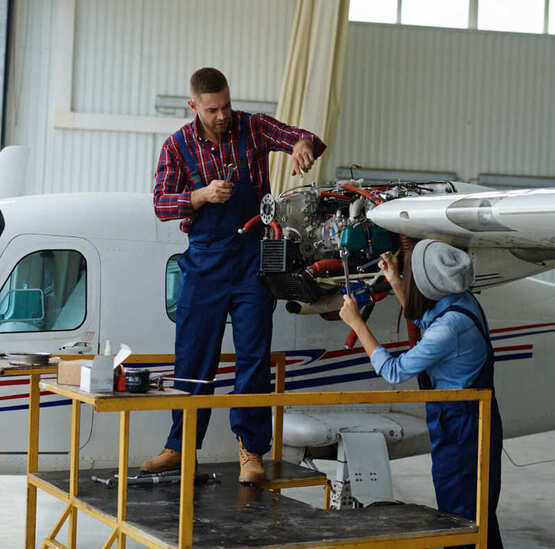
  • Live aircraft familiarisation
  • Tool usage and inspection procedures

Training takes place in a controlled aviation environment designed to simulate real airline and maintenance operations.

This phase builds the technical confidence required for real-world aircraft maintenance responsibilities.

Step 4: Clear DGCA CAR-66 Module Examinations

During and after academic training, students must successfully clear the DGCA CAR-66 module examinations.

These examinations evaluate knowledge across critical aviation maintenance subjects such as:

  • Aircraft aerodynamics
  • Electrical fundamentals
  • Turbine engines
  • Aircraft systems
  • Maintenance practices
  • Aviation legislation

Passing all required modules is mandatory to progress toward AME licensing eligibility.

DGCA module certification demonstrates that a candidate meets national and international competency standards required in aviation maintenance.

Step 5: Gain Aircraft Maintenance Experience (CAR-145 Organisation)

After clearing DGCA modules, candidates must undergo practical maintenance experience at DGCA-approved Maintenance Repair Organisations (MROs) operating under CAR-145 approval.

This stage is extremely important because:

  • Students work on operational aircraft
  • Real airline maintenance procedures are learned
  • Exposure to scheduled and unscheduled maintenance occurs
  • Troubleshooting skills are developed

Typical experience includes:

  • Aircraft inspections
  • Component replacement
  • System testing
  • Maintenance documentation
  • Safety compliance procedures

Without this hands-on aircraft maintenance experience, an AME licence cannot be issued. This phase transforms students into industry-ready aviation professionals

Step 6: Apply for DGCA AME Licence (CAR-66)

Once candidates complete:

1. Required DGCA module examinations

2. Mandatory aircraft maintenance experience

3. Type training requirements

They can apply for the Aircraft Maintenance Engineer Licence issued by DGCA under CAR-66 regulations.

The licence authorises engineers within specific aircraft categories, such as:

  • Mechanical Stream (B1.1, B1.2, B1.3)
  • Avionics Stream (B2)

The AME licence is internationally aligned with ICAO standards, making Indian AMEs employable across global aviation markets.

Step 7: Become Certifying Staff (CRS Authorisation)

After licensing and aircraft-type endorsement, the engineer becomes a Certifying Staff, also known as a CRS (Certificate of Release to Service) authority.

This is the most critical milestone in an AME career.

A Certifying AME is legally authorised to:

  • Inspect aircraft condition
  • Approve completed maintenance work
  • Certify aircraft as safe for flight operations

No aircraft can depart without certification from licensed AME personnel. This responsibility places AMEs among the most trusted professionals in aviation safety worldwide.

Career Growth After Becoming an AME

Once licensed, career opportunities expand rapidly across aviation sectors:

  • Airlines
  • Aircraft Maintenance Organisations (MROs)
  • Airports
  • Aviation manufacturing companies
  • Aircraft leasing firms
  • Defence aviation sector
  • International aviation organisations

With experience, professionals can advance to roles such as:

  • Senior AME
  • Maintenance Manager
  • Quality Assurance Engineer
  • Continuing Airworthiness Manager
  • Technical Services Engineer

Global demand for licensed AMEs continues to grow as aircraft fleets expand worldwide.

Why This Career Path Matters

Aircraft Maintenance Engineering is not just another technical qualification. It is a licensed profession directly responsible for passenger safety.

Every successful flight depends on the expertise of AMEs who ensure aircraft reliability and operational safety.

As India rapidly expands airport infrastructure and airline fleets, the need for skilled and licensed AMEs is increasing significantly. This makes AME one of the most secure and future-ready aviation careers available today.

element
offer

Your Journey Begins Here

The pathway to becoming an Aircraft Maintenance Engineer requires dedication, technical training, and regulatory certification. However, the rewards include global career mobility, professional recognition, and long-term job stability.

By following the DGCA-approved AME training and licensing pathway, students step into a profession that forms the backbone of the aviation industry.

If aircraft fly safely, it is because an AME certified them fit to fly.